Street Legal Golf Carts in Florida: LSV Laws
LSV vs golf cart, required equipment, registration, titling and insurance — the complete guide to driving a street-legal golf cart legally in Florida.
By Citrushills Golf Carts Editorial Team — June 12, 2026
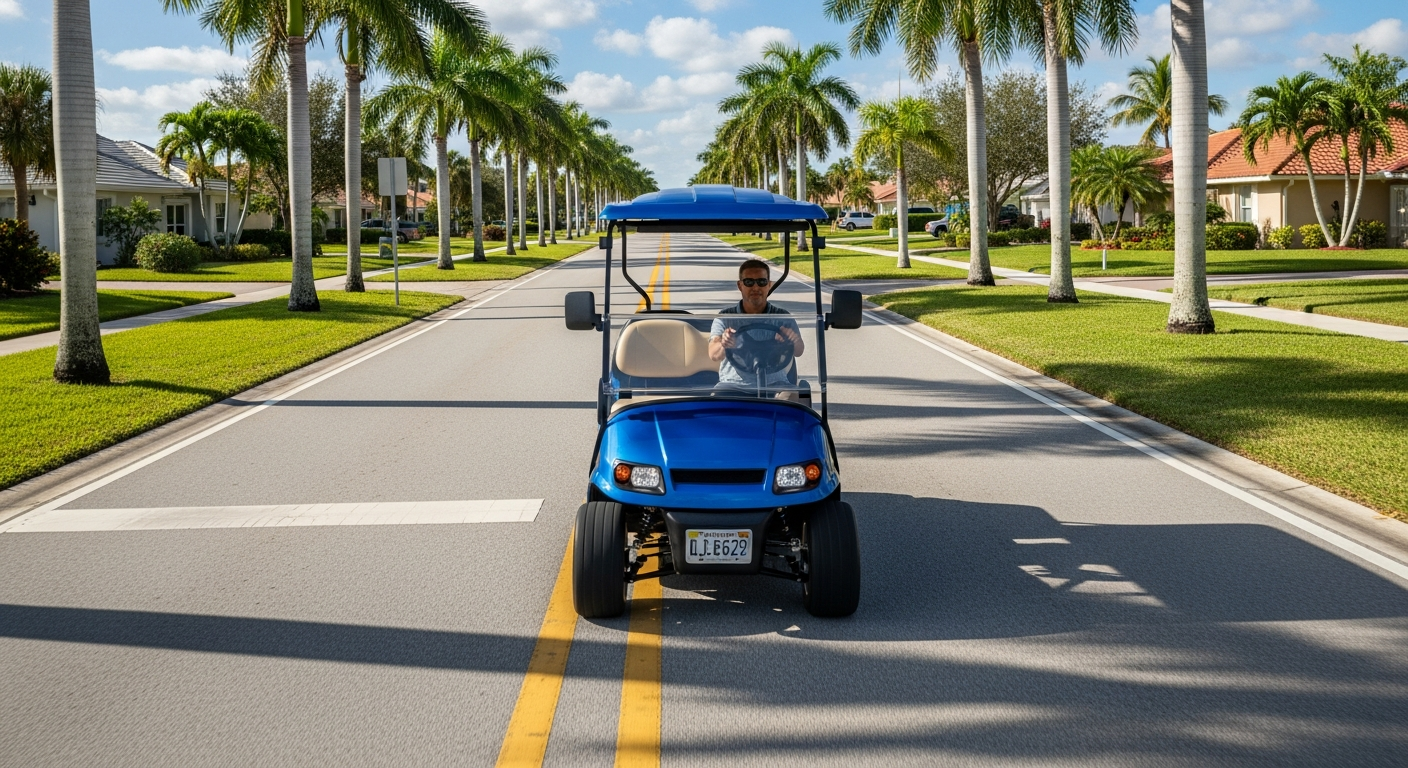
Understanding street-legal golf carts in Florida can save you from fines — and from buying the wrong vehicle. Florida law draws a clear line between a "golf cart" and a "Low Speed Vehicle" (LSV), and only one of them can legally drive on most public roads. This guide explains the difference, the equipment Florida requires, and how to register, title, and insure a street-legal cart.
Golf Cart vs. Low Speed Vehicle (LSV): What's the Difference in Florida?
Under Florida law, a standard golf cart is limited to about 20 mph and may only be operated on designated roads, golf cart paths, and certain low-speed county or municipal roads. A Low Speed Vehicle (LSV) is a federally regulated class that travels 20–25 mph and, when properly equipped, registered, titled, and insured, may be driven on public roads posted at 35 mph or less.
What Equipment Makes a Golf Cart Street Legal in Florida?
To be a street-legal LSV under federal FMVSS 500 standards, a cart must have:
- Headlights and taillights
- Turn signals (front and rear)
- Brake lights
- Rearview and side mirrors
- Seat belts for every seat
- A horn and a windshield
- DOT-approved tires
- A 17-character Vehicle Identification Number (VIN)
Many of the carts in our inventory come LSV-ready from the factory. If you want a road-legal cart, confirm it is built and titled as an LSV before buying.
How Do You Register a Street-Legal Golf Cart in Florida?
Because an LSV is a titled motor vehicle, you register it through the Florida Department of Highway Safety and Motor Vehicles (FLHSMV) at your county tax collector's office. You'll need the manufacturer's certificate of origin or existing title, proof of insurance, and the VIN. Once registered, the LSV receives a license plate just like a car.
Do You Need Insurance for a Street-Legal Golf Cart in Florida?
Yes. Florida requires personal injury protection (PIP) and property damage liability (PDL) insurance for LSVs operated on public roads, the same minimums required for automobiles. Standard low-speed golf carts used only on cart paths are not titled and have different rules, but if you drive on roads, you need LSV insurance.
Can You Drive a Golf Cart on Florida Roads?
You can drive a properly equipped, registered, titled, and insured LSV on Florida roads posted at 35 mph or less, and you may cross certain higher-speed roads at controlled intersections. A non-LSV golf cart can only be driven on roads specifically designated for golf carts by the local government, typically inside golf cart communities. The driver must be at least 14–16 years old depending on local rules and the vehicle type.
Should You Buy a Street-Legal Cart?
If you live in a golf cart community or a Florida beach town and want to run errands, an LSV is worth it. If your cart never leaves a private golf course or gated path, a standard cart is fine. Still deciding? Start with our Florida golf cart buyer's guide, and see how the rules apply locally in The Villages.
Ready to find the right golf cart? Browse current inventory updated daily, explore 0% APR financing, or call 352-558-3388 to speak with a Florida cart specialist.